
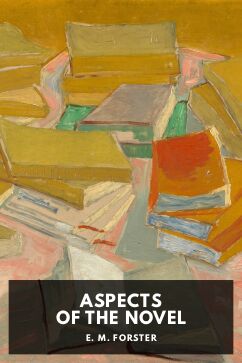
Aspects of the Novel - E. M. Forster
So, what's this book actually about? Don't let the title fool you—it's not a stuffy manual. It's the published version of a series of talks Forster gave at Cambridge University. He takes apart the novel like a curious kid with a clock, pointing to the gears inside: Story, People, Plot, Fantasy, Prophecy, Pattern, and Rhythm.
The Story
There isn't a plot in the traditional sense. Instead, Forster walks us through the essential ingredients of fiction. He starts with the simplest element—the story ("The king died and then the queen died")—and builds up to the most complex, like "prophecy," which is his word for the spiritual or mystical depth in writers like Dostoevsky. He famously introduces the idea of "flat" and "round" characters. Flat characters are simple, defined by a single trait (think: a greedy landlord). Round characters are complex and capable of surprising us, just like real people. The whole book is a conversation between these technical parts and the messy, beautiful humanity they're meant to serve.
Why You Should Read It
I love this book because Forster writes about writing with the warmth of a novelist, not the coldness of a critic. He uses examples from giants like Tolstoy, Dickens, and Austen, making you want to immediately re-read their books with new eyes. His voice is witty, personal, and sometimes brilliantly sarcastic. He pokes fun at over-complicated critics and defends the novel's right to be imperfect and alive. Reading this feels less like studying and more like eavesdropping on a master storyteller thinking out loud. It gave me a vocabulary for what I instinctively felt about stories but couldn't quite explain.
Final Verdict
This is the perfect book for any serious reader who wants to go deeper. If you're in a book club and want to move beyond "I liked it" or "I didn't," Forster gives you the tools. It's also a fantastic, encouraging read for aspiring writers, because it focuses on the why and the feeling, not just rigid rules. Honestly, it's for anyone who has ever fallen in love with a fictional character or been devastated by a plot twist and wondered, 'How did they do that?' 'Aspects of the Novel' pulls back the curtain, and the view is unforgettable.
This content is free to share and distribute. Share knowledge freely with the world.
Jennifer Walker
1 year agoVery helpful, thanks.
Donald Young
1 year agoEssential reading for students of this field.
Oliver Williams
1 year agoTo be perfectly clear, the atmosphere created is totally immersive. Absolutely essential reading.
Joseph Gonzalez
1 year agoSurprisingly enough, the storytelling feels authentic and emotionally grounded. I couldn't put it down.

Joshua Hill
11 months agoFive stars!