
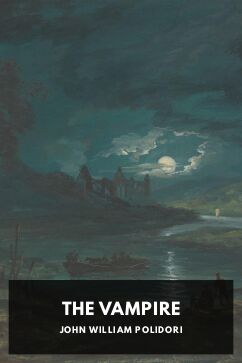
The Vampire - John William Polidori
Let's set the scene: a stormy night in 1816, a villa by Lake Geneva. Lord Byron, Percy Shelley, Mary Shelley (who was about to dream up Frankenstein), and a young doctor named John Polidori are telling ghost stories. This book, 'The Vampyre', is Polidori's famous contribution. While it's short enough to read in one sitting, its shadow is incredibly long.
The Story
The plot follows Aubrey, a naive and wealthy young man from London who becomes obsessed with a new acquaintance, Lord Ruthven. Ruthven is enigmatic, captivating, and shrouded in scandal. Despite warnings, Aubrey attaches himself to Ruthven as they embark on a grand tour of Europe. In Rome, Aubrey falls for a young woman named Ianthe, who tells him local folk tales about vampires. She warns him about a specific, noble monster. Shortly after, Ianthe is found murdered, with her throat torn. Aubrey is shattered and begins to suspect his companion. His suspicions grow when Ruthven is mortally wounded by bandits and, with his dying breath, makes Aubrey swear an oath of silence about his death and all his misdeeds for a year and a day. The story then follows Aubrey's return to London and the horrifying fulfillment of that oath when Ruthven reappears, more dangerous than ever, now setting his sights on Aubrey's own sister.
Why You Should Read It
This isn't a gore-fest. The terror is psychological and social. Lord Ruthven is the original 'bad boy' aristocrat—bored, beautiful, and utterly predatory. Polidori brilliantly taps into the fear of the charming outsider who infiltrates high society to feed on it. You read it feeling Aubrey's slow, sickening dread as he pieces the truth together, powerless to stop it because of his own foolish promise. The vampire here is a corrupting force, a symbol of the hidden rot within the glittering upper classes. It's fascinating to see all the seeds being planted: the suave villain, the innocent pursuer, the curse that binds them.
Final Verdict
This is a must-read for any fan of gothic horror or vampire lore. It's perfect for a dark and stormy night, for readers who love literary history, and for anyone who wants to understand where our modern vampire myths truly began. Think of it as the prototype for every seductive, immortal anti-hero that came after. It's a chilling, elegant, and surprisingly modern story about the monsters who wear our faces and walk in our drawing rooms.
This is a copyright-free edition. Feel free to use it for personal or commercial purposes.
Linda Moore
1 year agoAs someone working in this industry, I found the insights very accurate.
Emily Gonzalez
9 months agoI found the data interpretation to be highly professional and unbiased.
Jennifer Jones
2 months agoI stumbled upon this title during my weekend research and the step-by-step breakdown of the methodology is extremely helpful for students. Top-tier content that deserves more recognition.
Thomas Taylor
1 month agoLooking at the bibliography alone, it manages to maintain a consistent flow even when discussing difficult topics. A rare gem in a sea of mediocre content.



Emily Martin
9 months agoAs a professional in this niche, the author’s unique perspective adds a fresh layer to the discussion. I appreciate the effort that went into this curation.